

Best Air Ride Semi Truck Seats for Long Haul Drivers
Best Air Ride Semi Truck Seats for Long Haul Drivers
Best Air Ride Semi Truck Seats for Long-Haul Drivers:
What to Look for
Long-haul drivers spend hundreds of hours in the cab, where road vibration, uneven pavement and limited opportunities to change position can make an uncomfortable seat increasingly noticeable. A supportive air ride seat can help create a smoother, more comfortable driving environment by cushioning some of the movement transferred through the truck.
However, choosing the right seat involves more than finding one labelled “air ride.” The suspension type, adjustment range, seat dimensions, comfort features and compatibility with your truck all affect how well it will work for you.
This guide explains what to look for in an air ride semi truck seat, including the difference between Direct Air and 12-Volt suspension, the features that matter during extended driving, and the information needed to confirm fitment. Shop Semi Truck Seats, a brand of Ultra Seat, offers commercial seating options for long-haul drivers, owner-operators and fleets.
What Is an Air Ride Semi Truck Seat?
An air ride seat uses an air suspension system beneath the seat to help cushion movement caused by uneven pavement, bridge joints, potholes and other road conditions. This allows the seat to move independently from the truck cab instead of transferring every jolt directly to the driver.
The suspension can also be adjusted to the driver’s weight and preferred ride height. When properly set up, it provides more controlled movement and a smoother seating experience than a rigid or worn suspension base.
Air suspension seats are available with either a Direct Air connection or an integrated 12-Volt compressor. Both operate on the same basic principle, but the correct option depends on the truck’s existing air supply and electrical configuration.
Direct Air vs. 12-Volt Air Suspension Seats
The main difference between these two options is how the seat receives the air needed to operate its suspension.
Direct Air Seats
A Direct Air seat connects to the truck’s existing compressed-air system. This is generally the appropriate choice when the truck already has a suitable air connection available for the seat.
Before ordering, confirm that the truck has the required connection and that the seat’s base height and mounting pattern are suitable for the cab.
12-Volt Air Suspension Seats
A 12-Volt seat uses an integrated compressor to operate the air suspension instead of connecting to the truck’s air supply, or with trucks with no air supply. This makes it an option for medium-duty trucks and other vehicles that do not have a suitable air connection.
Installation requires a compatible 12-Volt electrical connection. Fitment, available space and mounting requirements should still be confirmed before ordering.
Neither system is inherently more comfortable than the other. The right choice primarily depends on how the truck is equipped and which installation method is appropriate for the application. Self-levelling and memory not available with 12-volt air suspensions.
Features That Matter for Long-Haul Driving
A seat that works well for extended driving should allow the driver to adjust both the seating position and suspension response. The most useful features are those that help the seat fit the driver properly and remain comfortable throughout a long shift.
Suspension and Ride-Height Adjustment
The suspension should support the driver’s weight while maintaining enough travel to cushion movement without frequently reaching the top or bottom of its range. Proper ride-height adjustment also helps position the driver comfortably in relation to the steering wheel, pedals and mirrors.
Air Lumbar & Bolster Support
Adjustable air lumbar support allows the driver to change the amount of support behind the lower back. Because comfort preferences vary, being able to make small adjustments can be especially useful during extended driving.
Cushion and Seat Adjustments
Seat slide, recline, cushion tilt and adjustable cushion length can help accommodate different body types and driving positions. These adjustments should provide support without placing unnecessary pressure behind the knees or requiring the driver to reach for the controls.
Armrests
Adjustable armrests can support the arms and shoulders when conditions allow, while still moving out of the way for easier entry and exit. Armrest availability and configuration vary by seat model.
Seat Heating
Optional seat heating can add comfort in cold-weather operation, particularly for drivers working through Canadian winters. Electrical requirements should be confirmed before ordering.
Upholstery and Cushioning
Durable upholstery and supportive cushioning are important for a seat used daily. Material choice may depend on the driver’s comfort preferences, the operating environment and how easily the seat needs to be cleaned.
Not every feature is included with every seat. Reviewing the individual product specifications will help identify which adjustments and options are available on a particular model.
How to Choose the Best Air Ride Seat for Your Truck
The best seat is not necessarily the one with the longest feature list. It is the seat that fits the truck correctly, supports the driver’s preferred position and includes the adjustments that will actually be used.
Before selecting a seat, consider the following:
- Truck information: Record the year, make and model, along with any relevant cab or trim details.
- Mounting requirements: Confirm the mounting pattern and whether the installation requires a vehicle-specific adapter or base. In most cases the truck year, make and model will determine the correct mount required.
- Available height: Determine whether the cab requires a high-base, low-base or no-base configuration. The overall installed height must leave enough room for suspension travel and a comfortable driving position.
- Available space: Check the seat width and surrounding clearance, including space near the door, console, controls and rear cab wall.
- Driver position: Consider the required slide range, cushion height, recline and access to the pedals, steering wheel and mirrors.
- Comfort options: Decide which features are priorities, such as air lumbar support, adjustable armrests, cushion adjustments, seat heating or a particular upholstery material.
- Daily application: Long-haul highway driving may place different demands on a seat than regional delivery, refuse collection or frequent-entry vocational work.
Measurements and fitment should be confirmed before ordering. If any information is unclear, Shop Semi Truck Seats can help review the truck and application before recommending a seating option.
For a complete checklist of the information to collect before ordering, read Where to Buy Semi Truck Seats Online: An Alternative to OEM Replacement Seats.
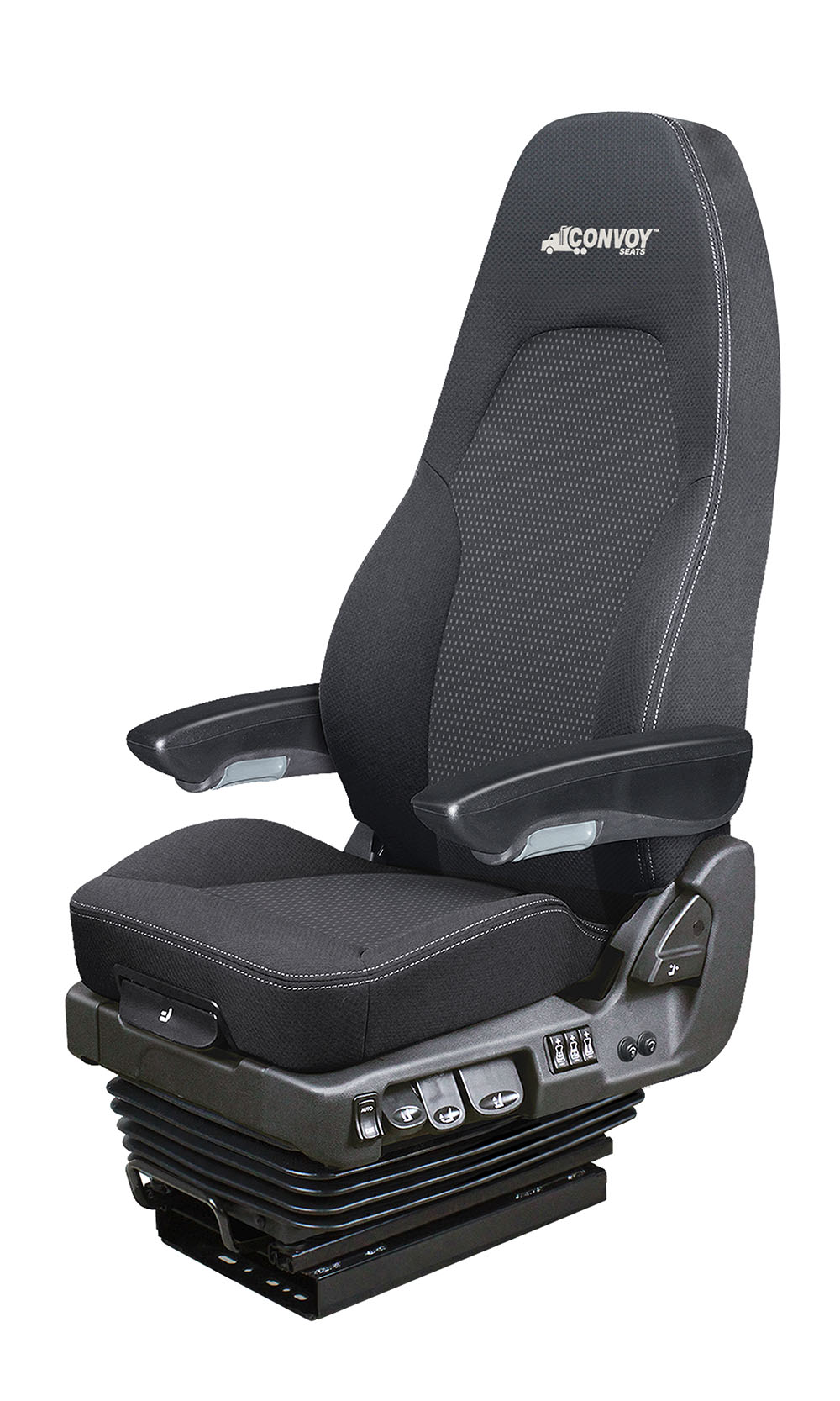
Comparing Convoy Air Suspension Seats
For long-haul and general commercial applications, Shop Semi Truck Seats offers the Convoy I, II and III with either Direct Air or 12-Volt air suspension. Direct Air models also feature self-levelling suspension with memory, which is not available with 12-Volt suspension. The broader seating range also includes Direct Air refuse seats and Hino seats with Mechanical or 12-Volt suspension, which are covered in our Semi Truck Seats for Sale guide.
Within the Convoy range, choosing between Direct Air and 12-Volt determines how the suspension receives air. Choosing between Convoy I, II and III determines the included comfort and adjustment features.
All three Convoy models include a 90mm suspension stroke, manual air-height adjustment, 30-degree seat tilt, adjustable cushion length, double-locking slide rails and adjustable left and right armrests, as well as many other features — check Semi Truck Seats for Sale
Convoy I: Entry Model
The Convoy I includes adjustable mechanical lumbar support. It provides the core seat and suspension adjustments but does not include an adjustable damper or integrated seat heating and cooling.
A 12-Volt seat and back-cushion heater kit is available as an option.
Convoy II: Mid-Range Model
The Convoy II replaces the mechanical lumbar adjustment with adjustable air lumbar support for the upper back, lower back and side bolsters. It also adds an adjustable suspension damper, allowing the driver to change how the seat responds to movement.
A 12-Volt seat and back-cushion heater kit is available as an option.
Convoy III: Premium Model
The Convoy III includes the air lumbar system and adjustable damper found in the Convoy II, along with integrated 12-Volt seat heating and cooling.
Because heating is already integrated into the Convoy III, the optional heater kit offered with the Convoy I and II is not required.
Direct Air and 12-Volt Model Differences
The same basic model progression is available with both suspension types. Direct Air models connect to the truck’s existing air supply and include self-levelling with memory. The Direct Air Convoy II and III also include a quick-release air valve.
The 12-Volt models use an integrated compressor to operate the suspension. They include manual air-height adjustment but do not have the self-levelling function found in the Direct Air models.
The appropriate combination depends on the truck’s available connections, required base configuration and the driver’s preferred features.
If you are deciding whether to repair or replace your current seat, see our guide to common semi truck seat replacement signs.
Choosing Air Suspension Seats for a Fleet
Trucks within the same fleet may have different cab configurations, mounting requirements, and air or electrical systems. Before ordering multiple seats, group vehicles by year, make, model, cab configuration, mounting configuration and available air or 12-Volt electrical connection. Then confirm the required features, upholstery, and quantity for each group.
Standardizing one seat model across compatible trucks can simplify driver familiarization and future parts or cover-kit ordering. However, fitment should still be confirmed for each vehicle type rather than assuming one configuration will fit the entire fleet.
Frequently Asked Questions About Air Ride Semi Truck Seats
Are air ride seats worth it for long-haul driving?
An air suspension seat can be a worthwhile upgrade for drivers who spend extended periods in the cab or regularly travel over uneven roads. Its suspension helps cushion movement and vibration while providing adjustable ride height. The value of the upgrade depends on the condition of the existing seat, the truck’s setup and the features the driver needs.
Can I install a 12-Volt seat if my truck does not have an air connection?
Yes. A 12-Volt air suspension seat uses an integrated compressor and does not require a connection to the truck’s compressed-air system. The truck must have a suitable 12-Volt electrical connection, and the seat’s physical fitment and mounting requirements must still be confirmed.
Find the Right Seat for Your Truck
The right seat should fit the truck correctly, support the driver’s preferred seating position and provide the features that matter during long hours on the road.
Browse the available Direct Air and 12-Volt suspension seats or contact Shop Semi Truck Seats for help comparing suspension types, confirming fitment and selecting the appropriate base configuration.
Have the truck’s year, make, model and cab information available so the team can provide more accurate guidance.
Share this article
Follow us
Table of Contents:
- What Is an Air Ride Semi Truck Seat?
- Direct Air vs. 12-Volt Air Suspension Seats
- Features That Matter for Long-Haul Driving
- How to Choose the Best Air Ride Seat for Your Truck
- Comparing Convoy Air Suspension Seats
- Choosing Air Suspension Seats for a Fleet
- Frequently Asked Questions About Air Ride Semi Truck Seats
Latest articles

November 27, 2026
Where to Buy Semi Truck Seats Online: An Alternative to OEM Replacement [...]

November 27, 2026
Best Air Ride Semi Truck Seats for Long-Haul Drivers: What to Look [...]
November 27, 2026
Semi Truck Seats for Sale: Upgrade Your Ride Professional drivers spend countless [...]